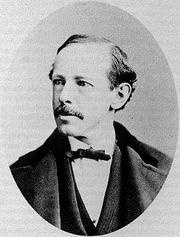
13 January 1832 – 18 July 1899
Horatio Alger, Jr. was a prolific 19th-century American author, most famous for his novels following the adventures of bootblacks, newsboys, peddlers, buskers, and other impoverished children in their rise from humble backgrounds to lives of respectable middle-class security and comfort. His novels were hugely popular in their day. Born in Chelsea, Massachusetts, the son of a Unitarian minister, Alger entered Harvard University at the age of 16. Following graduation, he briefly worked in education before touring Europe for almost a year. He then entered the Harvard Divinity School, and, in 1864, took a position at a Unitarian church in Brewster, Massachusetts. Two years later, he resigned following allegations he'd molested two teenage boys. He subsequently retired from the ministry entirely and moved to New York City where he formed an association with the Newsboys Lodging House and other agencies offering aid to impoverished children. His sympathy for the working boys of the city, coupled with the moral values learned at home, were the basis of his many juvenile "rags to riches" novels. He died in 1899.<sup>[1][1]</sup> [1]: http://en.wikipedia.org/wiki/Horatio_Alger,_Jr.
Ragged Dick
1868
Paul the Peddler
1871
Struggling upward
1890
The Erie Train Boy
1890
Fame and Fortune
1868
The young outlaw, or, Adrift in the streets
1875
Adrift in New York
1900
Helen Ford
1866
Rough and ready; or, Life among the New York newsboys
1869
Sam's chance
1876
Sink or swim
1870
Jack's ward; or, The boy guardian
1875
In a new world
1893
Bob Burton
1890
Luke Walton
1910
Tom Thatcher's fortune
1888
Do and dare, or
1884
The five hundred dollar check
1901
The young book agent; or, Frank Hardy's road to success
1905
Herbert Carter's legacy, or, The inventor's son
1875
The nugget finders
Chester Rand
1850
Facing the world
1850
Making his way
1800