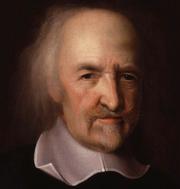
5 April 1588 – 4 December 1679
Thomas Hobbes, in some older texts Thomas Hobbs of Malmsbury, was an English philosopher, remembered today for his work on political philosophy. His 1651 book Leviathan established the foundation for most of Western political philosophy from the perspective of social contract theory. Hobbes also contributed to a diverse array of fields, including history, geometry, physics of gases, theology, ethics, general philosophy, and political science. His account of human nature as self-interested cooperation has proved to be an enduring theory in the field of philosophical anthropology. He was one of the main philosophers who founded materialism.<sup>[1][1]</sup> [1]: http://en.wikipedia.org/wiki/Thomas_Hobbes
Leviathan
1651
Human nature
1684
De cive
1949
The questions concerning liberty, necessity, and chance
1656
The English works of Thomas Hobbes of Malmesbury
1839
The elements of law
1929
Leviathan (Great Books in Philosophy)
1988
The metaphysical system of Hobbes in twelve chapters from his "Elements of philosophy concerning body," together with briefer extracts from his "Human nature" and "Leviathan"
1905
The metaphysical system of Hobbes
1905
Political Science
2005
The Essential Leviathan
2016
Behemoth
1680
OF MAN (GREAT IDEAS S.)
2005
Leviathan by Thomas Hobbes
2020
The ethics of Hobbes
1898
Leviathian
1929
Behemoth, the history of the causes of the civil-wars of England
1682
Body, man and citizen
1962
Leviathan: Authoritative Text
1996
Leviathan, parts one and two
1958
A Dialogue between a Philosopher and a Student of the Common Laws of England
1971
Selections
1930
De corpore
1655
Elements of philosophy, the first section, concerning body
1656