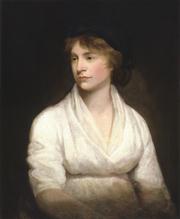
27 April 1759 – 10 September 1797
Mary Wollstonecraft (pronounced /ˈwʊlstən.krɑːft/; 27 April 1759 – 10 September 1797) was an eighteenth-century British writer, philosopher, and advocate of women's rights. During her brief career, she wrote novels, treatises, a travel narrative, a history of the French Revolution, a conduct book, and a children's book. Wollstonecraft is best known for *A Vindication of the Rights of Woman* (1792), in which she argues that women are not naturally inferior to men, but appear to be only because they lack education. She suggests that both men and women should be treated as rational beings and imagines a social order founded on reason.
A Vindication of Rights of Woman
1792
Maria; or, The Wrongs of Woman
1799
Prentice Hall Literature - Timeless Voices, Timeless Themes - The British Tradition
2002
The Norton Anthology of English Literature --Seventh Edition -- Volume 2A
2000
Political writings
1790
Letters written during a short residence in Sweden, Norway, and Denmark
1796
Mary
1788
Thoughts on the Education of Daughters
1787
The rights of woman
1929
The works of Mary Wollstonecraft
1989
Prentice Hall Literature--The British Edition--Volume II
2007
A vindication of the rights of men ; with, A vindication of the rights of woman, and Hints
1995
A Wollstonecraft anthology
1977
Great Ideas Vindication of the Rights of Women
2005
Vindication of Rights of Women
1974
The Vindications
1997
Vindicacion de Los Derechos de La Mujer
1998
Mary Wollstonecraft
1879
A Vindication Of The Rights Of Men And A Vindication Of The Rights Of Woman
Ahead of her time
1995
A vindication of the rights of men (1790)
1960
An historical and moral view of the origin and progress of the French Revolution and the effect it has produced in Europe
1794
The love letters of Mary Wollstonecraft to Gilbert Imlay
1908
Collected Letters of Mary Wollstonecraft
2004